Are We Seeing the Same World?
Perception as an individual and collective phenomenon—bridging neuroscience, spirituality, and epistemology
When two people look at the same tree, they don’t see the same thing.
One sees a species. Another sees a spirit.
One sees carbon capture. Another sees shade.
One sees beauty. Another sees nothing at all.
Same object. Different realities.
So we must ask: Are we seeing the same world—or just living in overlapping hallucinations?
The question isn’t rhetorical. It sits at the intersection of neuroscience, spirituality, and epistemology—and it challenges the fundamental assumption that reality is a single, shared construct we all access equally.
Perception Is Not Passive
We often treat perception as a window: the world is “out there,” and our senses deliver it faithfully to our inner screen. But perception is not passive. It is constructive.
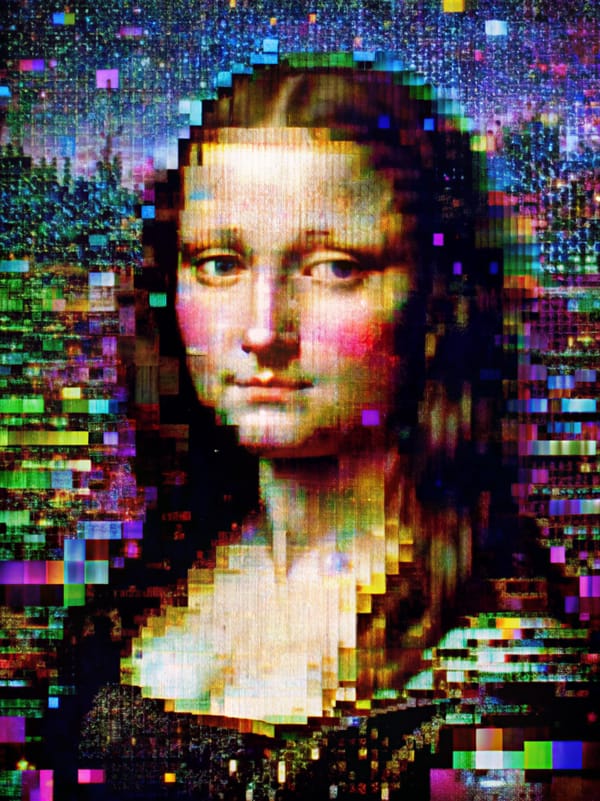
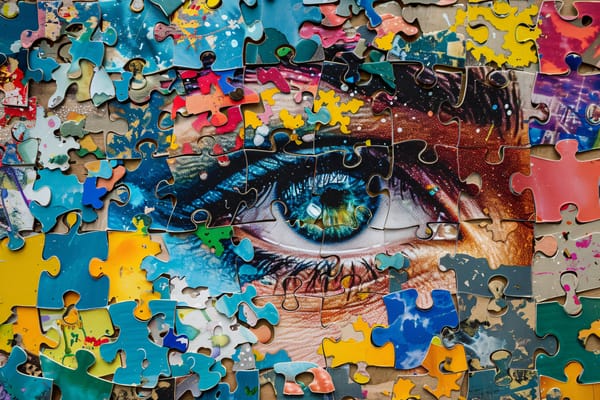
The brain receives fragmented, partial data—light frequencies, sound vibrations, chemical traces—and actively assembles them into a coherent image of the world. This process is informed by memory, context, emotional state, language, and culture. In short: you don’t see with your eyes—you see with your mind.
As neuroscientist Anil Seth explains, perception is a controlled hallucination. The brain constantly makes predictions about what’s out there and updates them based on sensory input. What we “see” is less about external reality and more about internal modeling.
That doesn’t mean reality is an illusion. It means our access to it is interpretive, filtered through a perceptual system shaped by countless invisible factors.
Subjective Perception Is Structurally Reliable (Until It Isn’t)
The fact that we usually agree on the color of the sky or the feel of rain is not proof of objective access to truth—it’s a sign of consensus calibration. We've been socialized into common categories, and our perceptual systems evolved in similar environments. But that calibration can break down.
Some people have synesthesia—they hear colors. Others, on psychedelics, report the walls breathing. Meditators can dissolve the boundary between self and world. Cultural frameworks shape what people see in inkblots, dreams, rituals, and faces.
Even trauma reshapes perception. A nervous system conditioned by violence may see threat where there is none—or miss danger entirely.
And yet we rarely question our own perceptual lens. We assume we see “what’s really there.”
This assumption is not just mistaken. It is epistemologically naïve.
What Language Does to Vision
Perception is shaped not only by biology, but by the vocabulary available to describe it. Language influences cognition—a principle known as the Sapir-Whorf hypothesis—and this extends to perception itself.
In cultures with multiple words for snow, people perceive finer distinctions between snow types. In some Aboriginal languages, cardinal directions replace left and right, giving speakers an innate sense of orientation. Even time is structured differently across linguistic frameworks: horizontal in English, vertical in Mandarin, cyclical in Quechua.
Words don’t just describe reality. They filter it, reinforcing what can be seen and what gets ignored. Your perceptual bandwidth is partially determined by the categories your culture gives you permission to use.
So again: are we seeing the same world? Or just speaking similar enough languages to assume we are?
Mysticism, Psychedelics, and Perceptual Expansion
Mystical traditions have long insisted that the world seen in ordinary consciousness is a veil—a thin slice of a much deeper field. Practices like meditation, ritual, fasting, and breathwork aim to expand perception beyond its default settings.
Psychedelic experiences often report this explicitly: the trees are alive, time dissolves, “the veil lifts.” Whether these are hallucinations or expanded realities is a matter of metaphysical orientation—but the fact that these experiences feel more real than real to many cannot be dismissed.
Such altered states suggest that perception is not fixed. It is flexible, layered, and, at times, transcendent. The idea that we all see the same baseline world becomes increasingly untenable the more we study the boundaries of consciousness.
Collective Perception and Social Reality
But perception is not just individual—it’s collective. Culture, media, and ideology shape what large groups believe to be real, true, or possible.
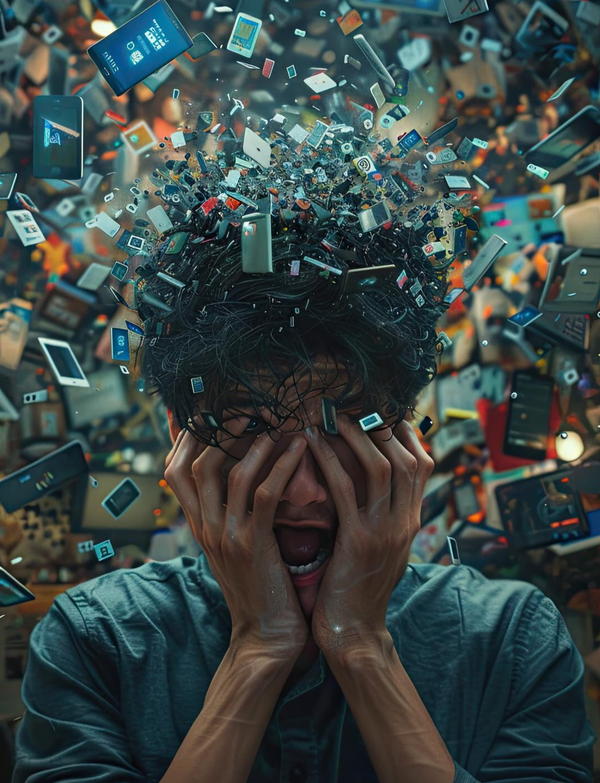
Social reality is a shared agreement—one that can fracture. When people live inside different information ecosystems, they literally see different worlds. Not metaphorically—neurologically. Their brains update predictive models based on different inputs, stories, and fears.
That’s why polarization isn’t just intellectual disagreement. It’s perceptual divergence.
And that’s why shared reality is fragile. It requires not just common facts, but common frameworks for interpreting those facts.
What It Means to See Differently
To see differently is not just to change your opinion—it is to recalibrate your experience of reality. It is to shift the lens through which meaning, value, and identity are constructed.
This is why shifts in consciousness—personal or collective—are often so destabilizing. They’re not intellectual exercises. They are existential reorganizations of what the world is.
And they often begin not with answers, but with disorientation.
Conclusion: The Question Beneath the Question
“Are we seeing the same world?” may seem philosophical. But it is urgent. Because if we assume shared perception where none exists, we misunderstand the conditions for dialogue, empathy, and truth-seeking.
To honor perception as a layered, constructed, and flexible phenomenon is not to descend into relativism. It is to approach reality with humility.
Because the truth may not be “out there.”
It may be emerging—between us.