Making as Meaning
How the act of creation can be a philosophical or spiritual practice
We live in a culture obsessed with outcomes. Products over process. Results over rituals. “What did you make?” takes precedence over “What did it make of you?”
But what if the act of making—of writing, painting, composing, building, designing—is not just a means to an end, but an act of meaning-making in itself? What if creation is not about productivity at all, but about perception, attention, and presence?
To create something is to enter into relationship with time, form, and mystery. It is to step into a space where logic loosens and intuition sharpens. Creation is not merely execution. It is interpretation. It is conversation. And in its most honest form, it becomes a philosophical and spiritual act.
Why We Make at All
At a biological level, making is not necessary for survival. But it’s central to human life. From cave paintings to cathedrals, from pottery to poetry, humans have always turned to creation—not just for utility, but for meaning.
Why?
Because to make is to externalize the internal. It gives form to feeling, shape to thought, and duration to something ephemeral. It takes what is unspoken and gives it structure—not to explain it away, but to honor it.
We make not because we fully understand, but because we are trying to. The act of creation is how we process complexity, grief, awe, desire, and doubt. It is not the answer—it is the gesture toward something more real than what can be said.
Making as Philosophical Practice
In philosophy, we are trained to define, critique, and clarify. But many truths can’t be reached by analysis alone. They must be approached obliquely—through metaphor, symbol, and composition.
Making allows us to think through materials, not just about ideas. The rhythm of a sentence, the balance of a composition, the curve of a line—these are not just aesthetic choices. They are forms of reasoning. A sculptor negotiating weight and gravity is solving problems in three dimensions. A poet arranging silence between lines is working with conceptual architecture.
These are not adornments of thought. They are thought.
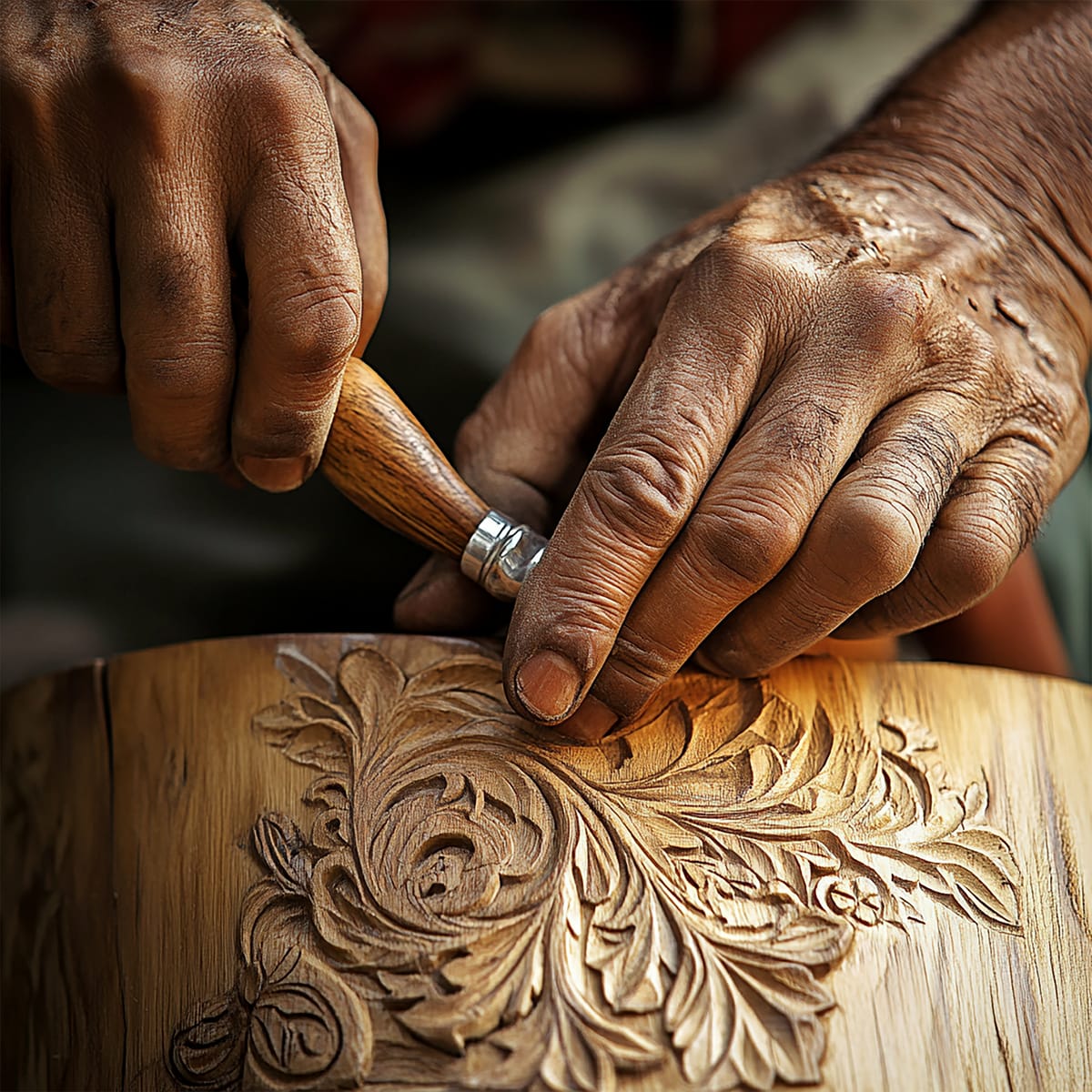
To create is to philosophize with your hands.
Spiritual Without Doctrine
Creation can also be spiritual—but not in a doctrinal sense.
To make something sincerely is to practice attention, humility, and surrender. The ego must relax. Time dilates. The maker becomes porous. What is created often exceeds intention. This is not a metaphor—it’s an observable phenomenon among serious creatives across cultures and traditions.
The mystic and the maker share something essential: they both enter a space where they are no longer the center of the experience. They become mediums for something coming through.
It doesn’t matter if you believe in God, the muse, the unconscious, or emergent intelligence. The experience is the same. The act of creation reveals that meaning is not imposed—it’s discovered. And the discovery changes you.
Against Optimization
Contemporary creative culture is obsessed with “shipping,” optimizing, and monetizing. Art becomes content. Writing becomes branding. Craft becomes hustle. The act of making is subjugated to the metrics of performance.
But meaning cannot be optimized. It cannot be automated. It resists linear process. It unfolds in layers, cycles, regressions, and returns. It often hides in failure.
When we reduce making to its output, we lose something vital: the capacity to be with our own experience in a non-extractive way.
Making, in this deeper sense, is not about what the work does in the world. It’s about what it does to the maker.
Ritual, Repetition, and Presence
Every maker develops rituals. These rituals are not efficiency hacks. They are perceptual practices. They create the conditions for attention.
The sharpening of a pencil. The clearing of a desk. The opening line of a chant. These actions are not ornamental—they are thresholds. They signal that we are entering sacred time: not because the act is solemn, but because it is aware.
In that space, the world changes. We begin to see relationships we couldn’t before. We notice details we’d previously ignored. We feel our way toward a structure that logic alone could not build.
This is the spiritual core of making: it requires us to be present in a world that trains us to be fragmented.
Creation as Integration
Carl Jung once wrote that art is the instinct to heal. He didn’t mean healing as catharsis. He meant integration—the pulling together of parts that feel incoherent.
To create something is to enact integration. Not always neatly. Not always successfully. But with intent. The blank page or canvas becomes a field of psychic resolution. The external form becomes a container for internal complexity.
In this way, making becomes a method of making yourself.
Conclusion: Meaning, Not Just Output
To reclaim creation as a philosophical or spiritual practice is to say: what I make is not a product of value. It is an expression of attention. It is how I study the world. How I wrestle with ambiguity. How I render invisible truths, even if only temporarily visible.
In the end, what we make may not matter to history. But it matters to perception. To soul. To structure. To depth.
And that, in a culture of distraction, is its own form of rebellion.