Perceptual Literacy: Training the senses for a post-truth world
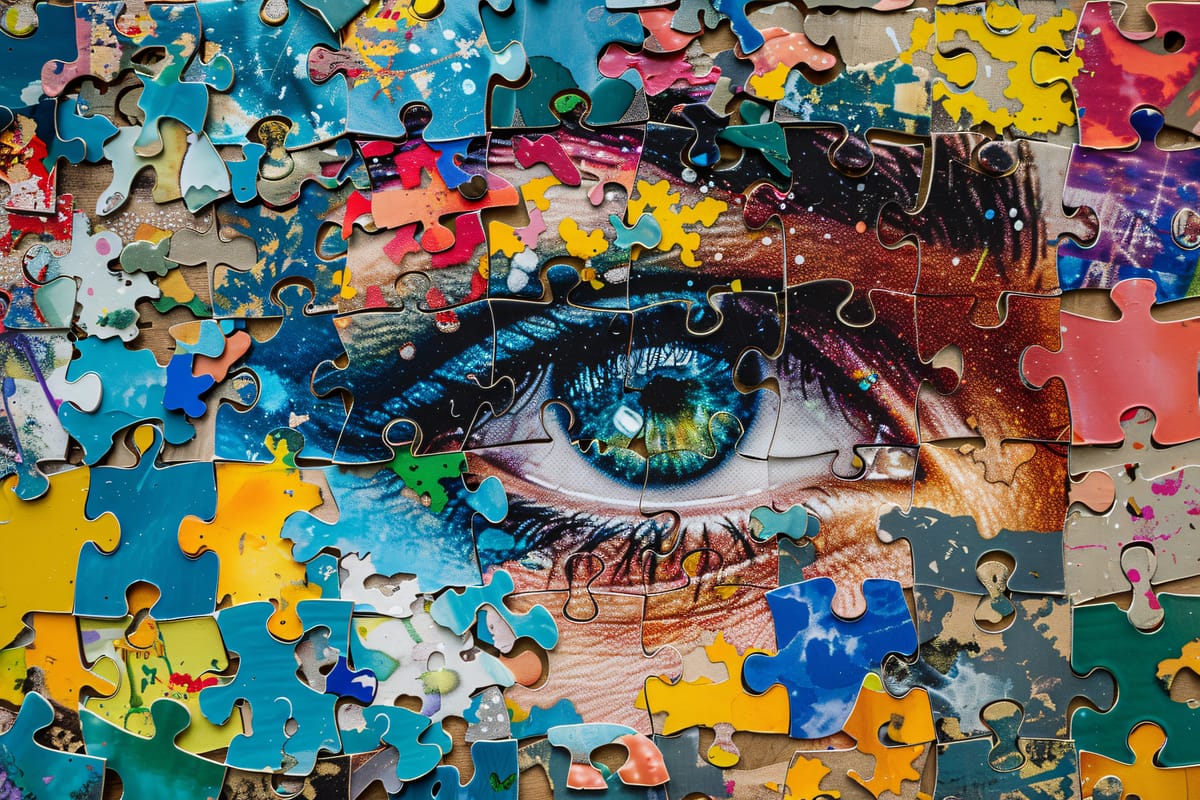
We are living through a crisis of perception.
It isn’t just that misinformation spreads faster than truth, or that algorithms distort what we see. The deeper problem is that we no longer trust our own senses—or understand how they’ve been trained.
We navigate a world of infinite data with perceptual systems built for intimacy and direct experience. Our senses evolved to interpret the movement of shadows, the tone of voices, the scent of rain—not the curated abstractions of screens. Yet every day, our perception is mediated, manipulated, and monetized.
In this sense, the post-truth world is not only a political condition. It’s a perceptual one.
And what we need now is not just media literacy—but perceptual literacy: a conscious retraining of how we notice, interpret, and respond to reality.
The Architecture of Attention
Perception begins with attention. What we notice becomes our world; what we ignore becomes invisible.
But attention is no longer freely given—it’s extracted. Platforms have turned it into a raw material, mined through design psychology and machine learning. Notifications, metrics, and infinite scroll all function as perceptual conditioning tools, training the nervous system toward fragmentation.
In this environment, the act of sustained attention becomes revolutionary.
To focus deeply on a single image, idea, or sensation is to resist the monetization of perception.
But attention is not simply focus. It’s an ethical choice about what we allow to shape our nervous system. Perceptual literacy begins with asking:
- Who trained my attention, and for what purpose?
- What is this environment rewarding me for noticing?
- What forms of perception have I unlearned without realizing it?
To reclaim perception is to rebuild discernment at the sensory level.
The Filtered World
Every culture teaches its members how to see.
We learn to categorize color, gesture, expression, and symbol according to our linguistic and social frameworks. We inherit perceptual biases—cultural defaults so deep they feel like common sense.
In the West, we’ve been trained to privilege the visual, the measurable, and the external. We treat sight as the master sense, and abstraction as the master language. The result is a world that appears flatly visible yet remains profoundly unseen.
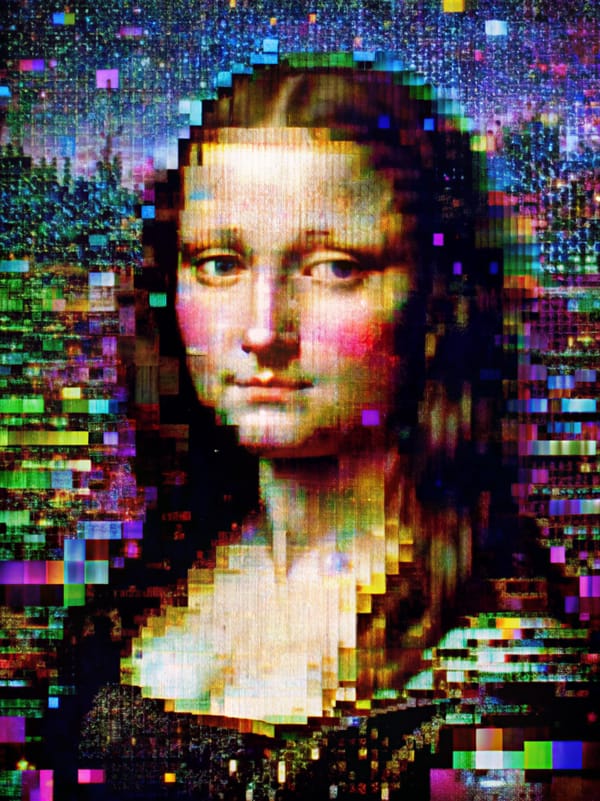
The post-truth condition amplifies this blindness. Deepfakes, curated identities, and AI-generated imagery erode our intuitive trust in appearances. But rather than only demanding better technology, we must cultivate better perception.
Perceptual literacy teaches us to see not just the image, but its conditions of creation—the algorithms behind it, the incentives shaping it, the worldview it encodes. It asks us to sense the architecture of mediation itself.
Embodied Perception
We tend to think of perception as something that happens in the head. But perception is a full-body event. The skin, the gut, the heartbeat, the breath—all contribute to how we register the world.
When perception is reduced to screen-based input, we lose a kind of proprioceptive intelligence—the ability to feel truth through resonance, not just logic.
Training perceptual literacy therefore means returning to embodied forms of knowing:
- Slowing down enough to feel subtle shifts in tone and tension.
- Noticing how environments make the body contract or expand.
- Learning to trust physical cues of coherence and dissonance.
This isn’t mystical; it’s neurological. The body is a sophisticated pattern-recognition system honed by evolution. Ignoring it leaves us susceptible to external manipulation—because when you can’t feel, you can’t discern.
From Media Literacy to Sensory Ethics
Traditional media literacy teaches us to fact-check, cross-reference, and verify. Necessary skills—but insufficient. Because facts alone cannot orient perception when the sensory field itself is distorted.
A tweet may be “true” and still manipulate through tone. An image may be “accurate” and still frame the world through fear.
Perceptual literacy therefore extends beyond information hygiene into sensory ethics: how we engage the felt world responsibly.
It means cultivating awareness of the emotional frequencies we amplify or consume. It means understanding that outrage has an economy, and that what we react to becomes what we reinforce.
Every click, every share, every scroll is a tiny act of perceptual participation. The question is not simply whether the information is correct—but whether the way of perceiving it expands or contracts our awareness.
The Politics of the Senses
Perception has always been political. Regimes—whether authoritarian or algorithmic—seek not only to control information, but to choreograph attention.
When power wants obedience, it doesn’t censor—it overwhelms. It floods the field with noise until discernment collapses. The result is not ignorance, but exhaustion.
The defense against this is not retreat. It’s refinement.
A perceptually literate society would teach its citizens not just what to think, but how to sense. It would treat awareness as a civic skill. It would recognize that democracy depends not only on free speech, but on clear seeing.
Because clarity is not a given—it is cultivated.
Training for a Post-Truth World
So how do we train perception in practice?
Not through apps or courses, but through habits of consciousness:
- Practice perceptual fasting. Spend time without input—no music, no phone, no agenda. Notice how your attention recalibrates.
- Observe context. When you read or watch something, ask: Who benefits from my attention here? What emotional state is this trying to induce?
- Rebuild analog senses. Touch real paper. Listen to silence. Taste something slowly. These are micro-acts of de-conditioning.
- Study the symbolic. Myths, metaphors, and rituals train perception in pattern and meaning—skills that linear logic can’t replace.
- Engage in dialogue, not debate. True conversation is a perceptual exercise: listening as seeing from another’s perspective.
These practices won’t solve disinformation. But they will restore a sense of orientation—the internal compass that lets you navigate the storm without surrendering to it.
Conclusion: Seeing as a Form of Care
Perceptual literacy is not about paranoia or vigilance. It’s about intimacy—with the world, with others, with our own awareness.
To see clearly is not to become detached. It is to participate consciously in the act of world-making that perception always is.
Because how we see determines what can be loved, what can be repaired, and what can be imagined.
In a post-truth world, perception itself becomes a moral art.
And the way we train our senses may decide not just what we know—
but what kind of world remains visible at all.