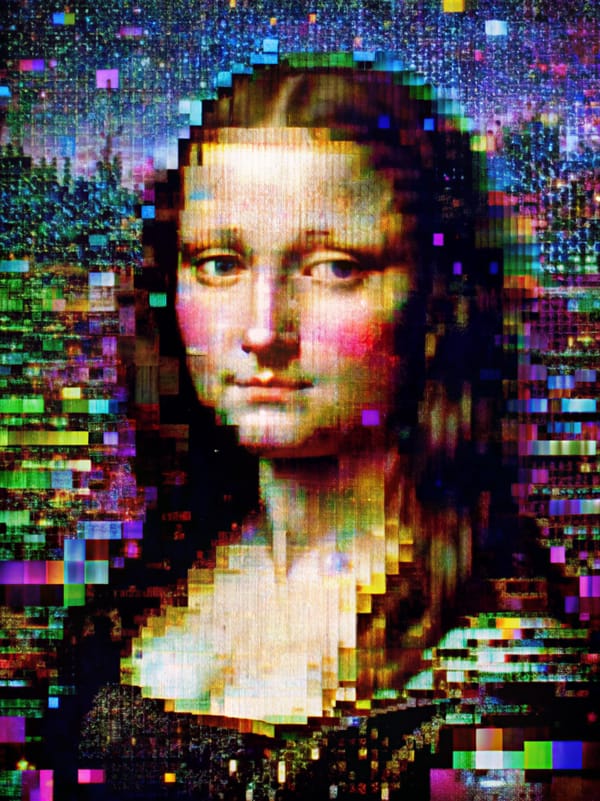
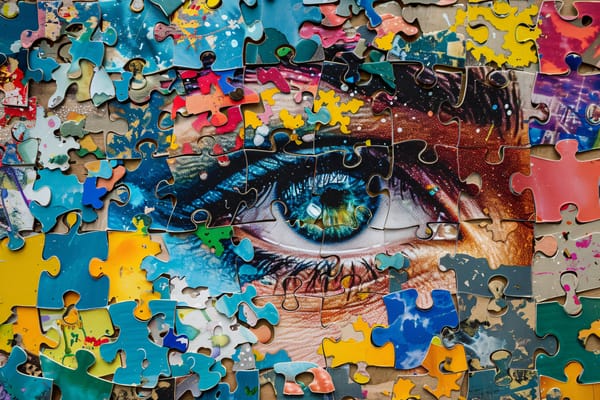
The Illusion of Objectivity

A critical look at science, media, and the myth of the "neutral observer"
Objectivity is one of the most powerful myths of the modern age. It underpins our faith in science, journalism, data, and systems of knowledge that claim to offer a view “from nowhere”—pure, detached, and unsullied by human bias.
We have been taught to trust what is neutral. But what if neutrality is not a truth position, but a cultural posture? What if the idea of objectivity is not evidence of clarity, but a way of masking power?
To question objectivity is not to abandon truth—it is to take responsibility for how truth is constructed, framed, and wielded. Because the idea of the “neutral observer” has done more than shape how we see the world. It has shaped who gets to be seen, whose knowledge counts, and what is allowed to be called real.
The Rise of Objectivity as Cultural Authority
The modern idea of objectivity emerged alongside Enlightenment rationalism, scientific empiricism, and the birth of modern institutions. In this context, objectivity was positioned as the opposite of superstition, emotion, or “unreliable” knowledge—especially knowledge rooted in the body, culture, or lived experience.
It was a noble pursuit: to strip away bias, sharpen perception, and discover universal laws. But it also came with hidden assumptions.
Objectivity was never just a method. It was a worldview. One that defined whose knowledge was valid—and whose was “subjective,” “emotional,” “folk,” or “unscientific.” This epistemic hierarchy didn’t just marginalize individuals—it marginalized entire cosmologies.
Western objectivity often excluded indigenous knowledge, oral tradition, mystical experience, intuitive knowing—not because they were wrong, but because they didn’t fit the grammar of detachment. The method became a filter, not just for data, but for reality itself.
The Observer Is Never Neutral
Modern science prides itself on removing the observer from the observed. But even in physics, this boundary has proven unstable.
Quantum mechanics has shown that the act of observation affects the outcome. The observer is entangled in the system. The boundary between subject and object is not fixed—it’s participatory.
In other words, observation changes reality.
This insight has profound implications beyond the laboratory. It suggests that knowledge is not a mirror of reality—it is a relationship to it. What we see is shaped by how we look, and how we look is shaped by what we believe, fear, expect, and value.
The belief in a “view from nowhere” is not a form of humility. It’s a form of denial.
Journalism, Framing, and the Performance of Neutrality
In media, objectivity is often used to signal trustworthiness. But neutrality in journalism is not the same as truth. Choosing what counts as a “balanced” perspective already involves judgment: whose voice is centered, what context is included, what histories are omitted.
For example: is giving “both sides” to a climate change debate responsible reporting—or a distortion of scientific consensus? Is describing state violence in the passive voice (“clashes broke out”) a neutral choice—or a way of avoiding accountability?
Language frames reality. And the myth of objectivity often becomes a way to mask the choices embedded in that framing.
Ironically, the most dangerous journalism is not openly biased reporting—it’s biased reporting pretending to be neutral.
Data Is Not Acontextual
Even data—our most seemingly objective domain—is shaped by the assumptions, categories, and limitations of those who collect it. What gets measured? What doesn’t? Who interprets the results? What stories are told?
Algorithms, too, are trained on biased datasets. Facial recognition technology performs worse on darker skin. Predictive policing disproportionately targets poor communities. These are not glitches. They are consequences of treating data as neutral when it’s not.
Numbers are not immune to ideology. They just disguise it better.
Why Objectivity Persists
If objectivity is so flawed, why do we still cling to it?
Because it provides the illusion of certainty. It protects us from the discomfort of ambiguity. And—most critically—it provides cover for authority. Claiming neutrality is a way of avoiding accountability for one’s perspective.
It allows institutions to say, “We’re just reporting the facts,” even when those facts are shaped by deep structural bias.
And it allows individuals to avoid grappling with the complexity of their own position in the world.
Beyond Objectivity: Toward Responsible Seeing
Rejecting objectivity doesn’t mean embracing relativism or nihilism. It means recognizing that all knowledge is situated—that we see the world from somewhere, not nowhere.
It means shifting from the question: Is this neutral?
To the deeper question: Whose perspective is being presented, and what structures support it?
We don’t need perfect neutrality. We need transparent, accountable frameworks for how knowledge is created and shared. We need disciplined subjectivity—ways of seeing that are self-aware, relational, and open to being changed.
Conclusion: The Most Honest Perspective Is One That Owns Itself
The myth of the neutral observer is seductive because it offers the comfort of distance. But distance is not always clarity. Sometimes it is evasion.
We don’t need less subjectivity. We need more honesty about it.
Because the most reliable guide to truth is not a disembodied intellect—it’s a mind aware of its own positioning, a voice that names its frame, a gaze that doesn’t hide behind the veil of objectivity.
In the end, there is no view from nowhere. Only the courage to see—and to be seen—as we really are: embedded, imperfect, and deeply responsible for the realities we help create.