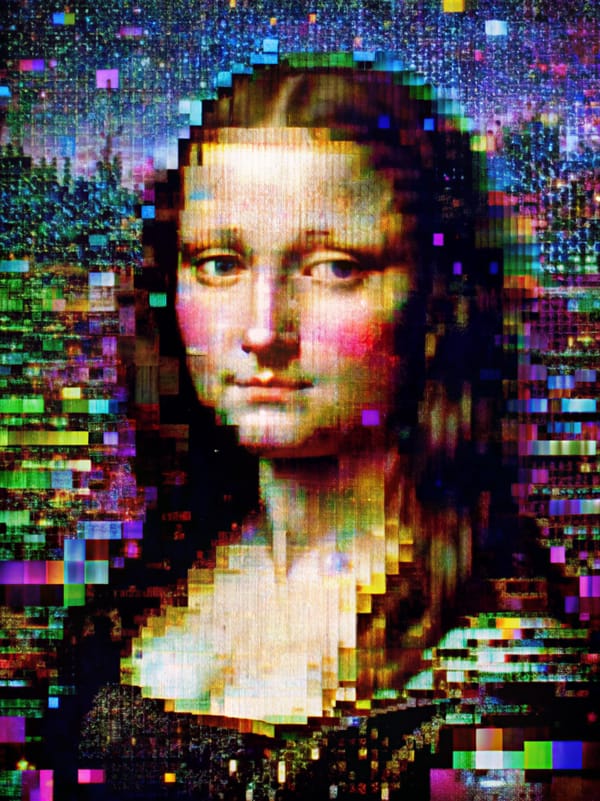
We Grew Up in a Failed Future

The Gen X/Y/Z disillusionment and what comes next.
There was a time when the future was something you could believe in.
You could grow up in the shadow of it—sleek, shining, inevitable. It promised progress. Clean lines. Space travel. Artificial intelligence that would make life easier. Economies that would keep growing. Civilizations that would keep becoming more rational, more humane, more sophisticated.
The future, we were told, would be better.
But somewhere along the way, that story broke.
And those of us born into its momentum—whether Gen X, Gen Y (Millennials), or Gen Z—have had to live in the strange dissonance between a future we were promised and a present that never arrived.
This is not just a political disappointment. It’s an epistemic wound. A fracture in the relationship between expectation and experience, between progress and perception.
We are the children of a broken timeline.
And we are now faced with the question: What comes after the failure of the future?
The Future Was a Story
From mid-century modernism to late-90s techno-optimism, the dominant myth of the West was a future built by reason, innovation, and freedom. It wasn’t always articulated explicitly—but it was felt. It lived in school curriculums, science fiction, advertising, architecture, and family planning.
It said:
- Tomorrow will be better than today.
- Technology will fix our problems.
- Institutions will evolve and refine themselves.
- Hard work will be rewarded.
- The world is getting smarter.
This story shaped how generations approached life: as a ladder, a linear narrative, a project with a destination. Education was investment. Work was advancement. Systems had flaws, but they were self-correcting.
And then the cracks appeared.
When Did the Future Start to Fail?
Ask a Gen Xer, and they might point to the economic instability of the '70s, the political disillusionment post-Nixon, or the late Cold War cynicism.
Ask a Millennial, and they’ll mention 9/11, the 2008 financial crash, and the collapse of housing, healthcare, and job security.
Ask a member of Gen Z, and they’ll point to climate collapse, digital nihilism, and the absurdity of trying to plan a future on a planet whose systems are being actively destroyed in real time.
There’s no single breaking point. But there is a pattern: the institutions and narratives that were supposed to deliver the future began to glitch.
The economy no longer rewarded hard work.
Politics no longer delivered meaningful change.
Technology no longer felt liberating—just addictive, performative, extractive.
The planet itself became a site of anxiety, not security.
What was promised as progress turned out to be deferred maintenance dressed in innovation.
Living in a Post-Future Culture
In a post-future world, the imagination narrows.
Instead of possibility, we are fed endless present-tense novelty: new apps, new memes, new micro-trends. Time becomes vertical, not horizontal—layered in information, but stagnant in vision.
We don’t imagine the next 100 years. We scroll.
The cultural mood reflects this.
- Gen X turned detachment into survival: irony, coolness, anti-authority minimalism.
- Millennials became the over-educated, underpaid generation, clinging to side hustles, slow living, and wellness culture as a way to cope.
- Gen Z is post-everything: post-truth, post-career, post-hope—and yet weirdly sincere, mythic, symbolic, experimental.
All three generations exist under the same unspoken condition: we are improvising in the ruins of the future.
The Spiritual Cost of Failed Futures
When a future dies, it doesn’t just leave behind disappointment. It leaves behind disorientation.
It becomes harder to make decisions. To commit. To imagine children, or retirement, or legacy. Time becomes foggy. Risk feels meaningless. Long-term thinking becomes a luxury for the powerful or delusional.
This is not apathy—it’s grief.
We are grieving something that never fully existed but was real enough to shape us:
- The idea that the world could get better in tangible, structural ways.
- That complexity would be rewarded, not punished.
- That knowledge would lead to wisdom.
- That meaning would deepen with time.
Instead, we have burnout, information fatigue, and a creeping sense that everything is both urgent and impotent.
The result is a kind of collective vertigo. A society drifting, not because it lacks intelligence, but because it lacks a believable horizon.
So What Now?
If the future we were promised is gone, we need something else. Not another utopia. Not another startup pitch. Not another brand campaign masquerading as transformation.
We need new ways of imagining what matters.
This doesn’t mean abandoning technology, design, or even capitalism entirely. But it means refusing to anchor our hopes in systems that only repackage the same logics under different names.
It means building from within the breakdown, not waiting for a savior.
And it starts with asking very different questions:
- What is worth preserving when the systems collapse?
- How do we restore cultural memory that isn’t institutional?
- What does a meaningful life look like in a world without upward mobility?
- What if healing, presence, and perception became central—rather than productivity and control?
These aren’t small pivots. They are epistemic revolutions.
The Return of the Mythic
One unexpected outcome of future failure is the return of the mythic imagination.
As literal progress collapses, symbolic thought re-emerges. Not as superstition, but as a deeper structure for meaning. People are returning to archetypes, astrology, ritual, and ancestral knowledge—not to escape reality, but to reorient in a world that has lost narrative coherence.
Myth offers something that linear time doesn’t: cyclical meaning.
It reminds us that collapse is not the end of the world. It is part of a longer story.
One in which death is real, but so is rebirth.
Conclusion: The Future Is a Practice
We grew up in a failed future.
But we are not its prisoners.
The challenge now is not to resurrect the old visions—but to imagine honest alternatives.
Futures that can hold grief, mystery, repair, and complexity—not as bugs, but as features.
Futures that are not built on dominance or endless growth, but on relational intelligence, aesthetics of care, and emotional fluency.
This future will not be televised.
It will be hand-built. Story-carried. Slowly remembered.
And maybe that’s what comes next:
Not a future that saves us.
But a generation that learns how to see in the dark—and build anyway.